
Cardiorespiratory fitness (CRF) is an important component of physical fitness and represents the ability of the heart and the lungs to deliver oxygen to the working muscles during maximal-effort exercise. Over the past decades, CRF has been shown to be inversely related to many common and prevalent chronic diseases, including but not limited to cardiovascular diseases, diabetes and several cancers. Also, CRF has been shown to be directly related to mental health.
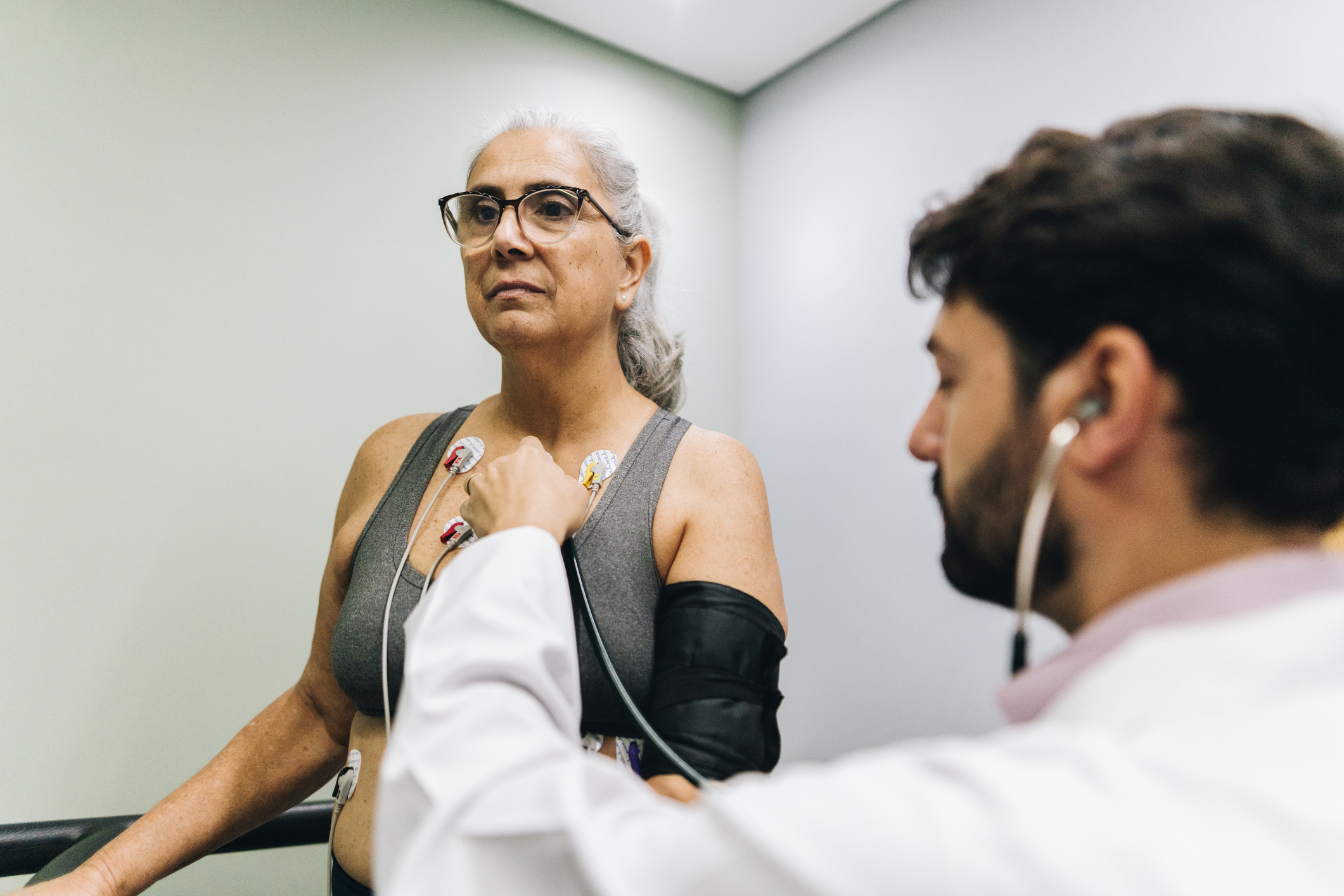
One of the most important roles of an exercise professional is to assess and evaluate CRF to develop an appropriate aerobic exercise prescription. Indeed, the American Heart Association issued a Scientific Statement that CRF be considered a vital sign. Submaximal exercise testing using a treadmill, a cycle ergometer or a stepping bench is commonly used to assess CRF in many health fitness settings. The utilization of these tests necessitates the exercise professional having the skill to assess heart rate accurately and to estimate maximal heart rate (HRmax).
Measurement of heart rate is commonly done through either palpitation or the use of wearable technology. However, there are shortcomings to both approaches; thus, exercise professionals should be aware of the pros and cons of both methods. There are also some drawbacks associated with estimating of HRmax. Although several regression equations can be used to estimate HRmax, all of them are subject to interindividual variability (i.e., SEE= ± 3-12 bpm) which makes these estimations less reliable than direct measurement from a maximal exercise test. Both the inability to measure heart rate correctly and the inaccuracy of estimating HRmax, can lead to prescribing exercise at intensity levels that are higher or lower than intended.
In our March/April 2023 article published in ACSM’s Health and Fitness Journal, we sought to provide exercise professionals with practical examples of submaximal exercise testing to illustrate potential shortcomings associated with these common practices. For example, we demonstrated how small heart rate measurement errors and miscalculations can lead to substantial under- and overestimation of CRF. We provided insight into steps that the exercise professional can take to develop a more accurate exercise prescription. These simple steps include regular calibration of testing equipment, choosing appropriate and population-specific HRmax equations, following testing instructions, selecting test protocols that suit the individual, meeting the submaximal exercise testing assumptions, measuring heart rate accurately and utilizing the rating of perceived exertion (RPE) scale as a supplementary tool.
The accurate estimation of CRF using submaximal exercise testing helps exercise professionals prescribe an appropriate exercise intensity for their clients. Intensity is an integral part of the FITT (Frequency, Intensity, Time, and Time) principle of exercise prescription as described by ACSM. The knowledge, skill and ability to correctly conduct submaximal exercise testing and understand the limitations of these assessments is a critical skill for all exercise professionals.

Meir Magal, PhD, FACSM, is the chair of the School of Mathematics and Sciences as well as program director and professor of exercise science at North Carolina Wesleyan University. Dr. Magal served on ACSM’s Committee for Certification and Registry Boards (CCRB) in several capacities, including as chair of the International Subcommittee and as the chair of CCRB. He also served as an associate editor of the 10th edition of ACSM’s Guidelines for Exercise Testing and Prescription and as a coeditor on the sixth edition of ACSM’s Fitness Assessment Manual.

Deborah Riebe, PhD, FACSM, is the interim dean of the College of Health Sciences and professor in the Department of Kinesiology at the University of Rhode Island. Dr. Riebe served on ACSM’s Board of Trustees, as chair of the ACSM International Health & Fitness Summit and as chair of the CCRB. She is the senior editor of the 10th edition of ACSM’s Guidelines for Exercise Testing and Prescription and has authored more than 80 articles in refereed journals and book chapters.