

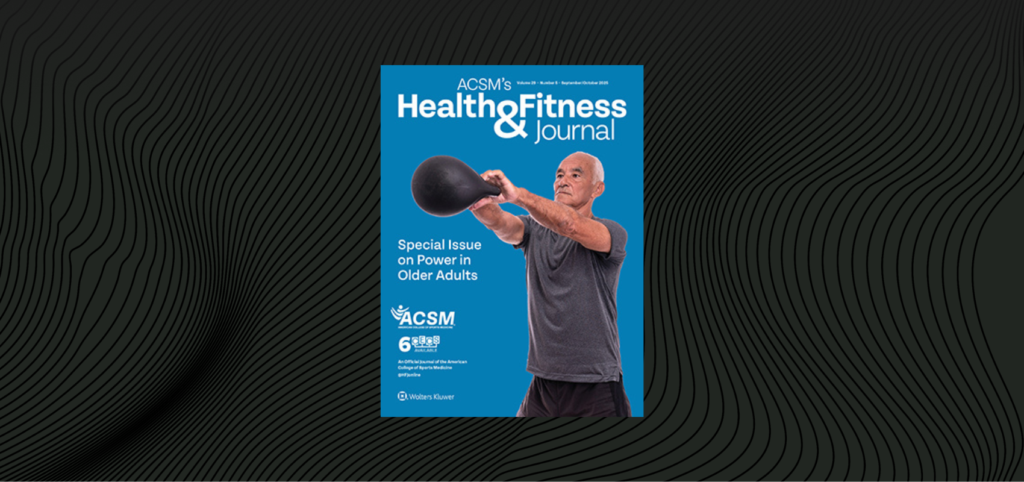
It is my favorite time of year, when we announce the top trends in the health and fitness industry. I am excited to share this issue of ACSM’s Health & Fitness Journal® (HFJ). Each year, the Worldwide Fitness Trends issue provides a unique opportunity to examine not only the trends influencing the health and fitness industry, but also the broader implications for professional practice. The 2027 Worldwide Survey of Fitness Trends highlights a field that continues to evolve through technological innovation and a growing appreciation for the role of exercise in supporting health across the lifespan.
Several themes emerged across this year’s Top 20 Trends. Technology remains deeply embedded in professional practice. Yet the story extends beyond simply collecting data on daily step counts. Increasingly, exercise professionals are challenged to interpret information and personalize programming to inform lasting behavior change. In “Beyond the Numbers: Navigating Fitness Technology in the Age of AI,” Liz Hathaway, PhD, MPH, M.Ed. and Lauren A. Greenspoon, MS, provide valuable insights for professionals who are either learning to navigate emerging technologies or seeking to optimize their current use. Their Enhancing Your Behavioral Toolkit column explores how practitioners can thoughtfully integrate technology while maintaining a client-centered approach.
This year’s rankings also suggest a growing recognition that where people choose to be active may be just as important as how they move in supporting lifelong health. Group fitness classes continue to be a popular option for fostering social connection and community engagement. At the same time, consumers continue to value flexibility and convenience. The re-emergence of Fitness at Home underscores the ongoing demand for home-based exercise, virtual coaching, and on-demand fitness platforms that allow individuals to personalize their activity experiences while integrating movement into their daily routines.
One notable new trend is Competitive Fitness Events, which debuted at No. 15 and was ranked as high as No. 2 by respondents working in athletics and sports performance settings. Beyond increased fitness and performance outcomes, this emerging trend is a nod to the role of exercise and movement in community building and fostering a sense of belonging. In her feature article, Stephanie L. Cooper, PhD, ACSM-EP, explores the growing appeal of these events and highlights the unique physical, social, and motivational factors that drive participation. As their popularity continues to grow, exercise professionals are well positioned to help individuals prepare safely while enhancing the positive physical and social benefits of participation.
Complementing the feature articles are columns that extend the applicability of the Top 20 Trends, making this special issue a practical teaching resource for educators and practitioners alike. For example, in the Physical Activity & Public Health column, Kristi M. King, PhD, FACSM, CHES, and colleagues highlight that promoting a healthy workforce extends beyond individual exercise behaviors and requires organizational policies and environmental support that facilitate physical activity. Their contribution provides exercise professionals with practical strategies for fostering movement-friendly workplace cultures and advancing employee well-being. Be sure to check out all the columns in this issue (inside this issue box)!
Finally, I encourage readers to explore the companion feature, The Employer Perspective: Insights and Practical Applications of the 2027 Fitness Trends, as well as the international commentary that provides valuable global context for understanding how Trends differ across regions and professional environments. These unique articles reinforce that although the fitness industry continues to change, the profession’s core mission is helping people achieve meaningful improvements in their health and quality of life through movement and exercise. I am honored to collaborate with such an outstanding team of editors and authors who are subject matter experts in this field. I hope this issue informs your practice, sparks new ideas, and helps you prepare for the opportunities and challenges that lie ahead in 2027.
Sincerely,

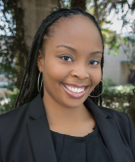
A’Naja M. Newsome, PhD
Associate Editor-in-Chief
University of Central Florida
anaja.newsome@ucf.edu

 Grace T. DeSimone, BA, ACSM-CPT, ACSM-GEI is the wellness director for the Wyckoff Family YMCA in New Jersey. She is the editor for ACSM’s Resource Manual for the Group Exercise Instructor, (2011) and is the 2016 IDEA Health & Fitness Association Program Director of the Year. Grace is a certified Mental Health First Aid instructor.
 Charles J. Fountaine, PhD, FACSM, is a professor in the Department of Kinesiology at St. Olaf College in Northfield, MN.
 Michael Bruneau Jr., PhD, MBA, FACSM, ACSM-EP, NASM CPT, is an associate professor and program director of Exercise Science at Drexel University in Philadelphia. He directs the Clinical Exercise Physiology Laboratory, where his work focuses on translating exercise physiology research into practical strategies for cardiometabolic health, weight management, and behavior change. Dr. Bruneau Jr. teaches undergraduate and graduate courses in exercise physiology, research methods and program design, and is particularly interested in empowering exercise professionals to use precise, efficient interventions that produce meaningful clinical outcomes. He is a Fellow of the American College of Sports Medicine and advocates for evidence-informed, minimum effective dose approaches to exercise prescription.
Sets, Reps, and Science
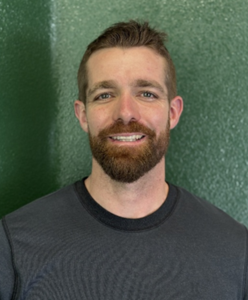 Zachary Mang, PhD, received a Master’s and Doctorate degree in exercise science from the University of New Mexico. Upon graduation in 2021, he completed a post-doc appointment at the Los Alamos National Laboratory. Currently, he lectures in the Exercise Science program at the University of New Mexico and conducts strength and conditioning services for the Albuquerque Baseball Academy. His research interests primarily revolve around the application of resistance training – from enhancing athletic performance, improving the livelihood of general-population clients, to mitigating risk for chronic diseases such as type 2 diabetes.
 Mary M. Yoke, PhD, MA, MM, FACSM, EIM, is a full-time faculty member at the School for Health and Human Sciences at Indiana University Indianapolis in the Department of Kinesiology. Before her position in Indiana, she was an adjunct professor at Adelphi University for 22 years, where she authored or coauthored numerous group exercise research studies. She is the author of four fitness textbooks and one consumer book on happiness; she has presented in 18 countries and throughout the United States on a wide variety of health/fitness topics; and has obtained 24 certifications. Her research interests include behavior change, positive psychology, motivation, obesity, group fitness, and personal training efficacy.
 Stella Lucia Volpe, PhD, RDN, FACSM, ACSM-CEP, is professor and head of the Department of Human Nutrition, Foods, and Exercise at Virginia Tech, Blacksburg, VA. Her degrees are in both Nutrition and Exercise Physiology; she also is an ACSM Certified Clinical Exercise Physiologist® and a registered dietitian. Dr. Volpe’s research focuses on obesity and diabetes prevention using traditional interventions, mineral supplementation, altering the environment to result in greater physical activity and healthy eating, as well as in sport nutrition. Dr. Volpe is president of ACSM (2024-2025), chair of the ACSM American Fitness Index, and is on the Board of Trustees for the Institute for the Advancement of Food and Nutrition Sciences. Dr. Volpe is an associate editor of ACSM’s Health & Fitness Journal®, the Translational Journal of the American College of Sports Medicine, and Exercise and Sport Sciences Reviews. She also is editor-in-chief for Current Nutrition Reports.
 JoAnn M. Eickhoff-Shemek, PhD, FACSM, FAWHP, professor emeritus, Exercise Science at the University of South Florida and president of the Fitness Law Academy, LLC, is an internationally known author and speaker. For more than 35 years, her teaching and research have focused on fitness safety, legal liability, and risk management issues. Dr. Eickhoff-Shemek is the lead author of a new 2025 textbook titled Legal Toolkit for Health and Wellness Coaches and Managers. She also is the lead author of a legal/risk management textbook, Law for Fitness Managers and Exercise Professionals, and is the co-author of another textbook, Rule the Rules of Workplace Wellness Programs, published in 2020 and 2021, respectively.
 Michael Stack, BS, ACSM-EP, ACSM-EIM, ACSM-PAPHS, is the founder and CEO of Applied Fitness Solutions and Michigan Moves Coalition. He is a faculty lecturer for the University of Michigan’s School of Kinesiology as well as the creator and host of the Wellness Paradox Podcast, produced in conjunction with the University of Michigan. He is an exercise physiologist by training and a health entrepreneur, health educator, and fitness industry advocate by trade. He currently serves on ACSM’s Strategic Health Initiative Committee on Health Equity and as the Business Edge associate editor for ACSM’s Health & Fitness Journal®.
 Nico P. Pronk, PhD, FACSM, FAWHP, is president of the HealthPartners Institute and chief science officer at HealthPartners in Minneapolis, Minnesota. Dr. Pronk is an affiliate full professor of health policy and management at the University of Minnesota School of Public Health. He is a past-president of the International Association for Worksite Health Promotion (IAWHP), co-author of the IAWHP Online Certificate Course, editor of ACSM’s Worksite Health Handbook, 2nd edition, and associate editor for ACSM’s Health & Fitness Journal®.
 Barbara A. Bushman, PhD, FACSM, ACSM-CEP, ACSM-EP, ACSM-CPT, is faculty emeritus at Missouri State University. Dr. Bushman has authored articles related to menopause, factors influencing exercise participation, and deep water run training; she edited both the first and second editions of ACSM’s Complete Guide to Fitness & Health (Human Kinetics, 2011 and 2017), edited the Fitness Professional’s Handbook, 8th edition (Human Kinetics, 2025), and promotes health/fitness at www.Facebook.com/FitnessID.
 Peter Ronai, MS, FACSM, FCEPA, ACSM-CEP, ACSM-EP, EIM, is a clinical professor of exercise science in the Department of Physical Therapy and Human Movement Sciences at Sacred Heart University in Fairfield Connecticut. He is a Fellow of the American College of Sports Medicine (ACSM) and serves as the associate editor-in-chief of ACSM’s Health & Fitness Journal®, overseeing the journal’s annual themed issue and as the Do It Right column associate editor. He is a past president of the New England Chapter of ACSM and speaks and writes about tips and tools exercise professionals can access and apply to better serve their clients when developing exercise programs.
 Liz Hathaway, PhD, MPH, is a UC Foundation associate professor in Health and Human Performance (HHP) at the University of Tennessee at Chattanooga, TN. She teaches Health Behavior Change and Psychology of Sport & Exercise in the Exercise and Health Sciences undergraduate program and serves as the program coordinator for the Healthy Eating and Active Living Through HHP Residential Learning Community for HHP freshmen. Beginning fall of 2022, she decided to do the unthinkable and moved into a freshman residence hall to serve as a faculty-in-residence. Her interests include learning how to best motivate individuals, especially college students, to make lasting positive behavior change. Her dislikes include blaring fire alarms at 2 a.m.
 Nicole Mendola, MS, ACSM-CEP, ACSM-EP, ACSM-GEI, EIM, registered clinical exercise physiologist, is a full-time faculty member within the Exercise Science and Wellness department at CT State Norwalk, Norwalk, CT. She received her BS in Exercise Science and her MS in Clinical Exercise Physiology from James Madison University. Nicole currently is a member of ACSM’s Group Exercise Instructor Committee on Certification and Registry Boards, she holds the position of MAX! newsletter editor for the New England regional chapter of the American College of Sports Medicine and is an active member of the Clinical Exercise Physiology Association Membership Committee. Her passion for clinical exercise physiology and her interest in chronic disease and the aging population has influenced much of her research.
Physical Activity & Public Health

Kristi M. King, Ph.D., FACSM, CHES, is a professor in the Department of Health and Sport Sciences and a Community Engagement faculty fellow at the University of Louisville. Dr. King conducts community-engaged, interdisciplinary research focused on physical activity and public health. She is a Certified Health Education Specialist (CHES), a Physical Activity and Public Health research fellow, an America Walks, Walking College fellow, and an American College of Sports Medicine (ACSM) fellow. Dr. King serves ACSM as an associate editor for ACSM’s Health & Fitness Journal®and as a member on the Health and Science Policy Committee. She’s an active supporter of local efforts to improve walkability, promote active transportation, and connect communities with outdoor and nature-based spaces.
 Paul Sorace, MS, FACSM, ACSM-CEP, is a clinical exercise physiologist in New Jersey. He is an associate editor for ACSM’s Health & Fitness Journal® and the clinical associate editor for ACSM’s Certification Review, 4th and 5th editions. Paul also has served on numerous ACSM Committees, including chair of the CCRB Publications Sub-Committee.
 Heath M. Burton, PhD, is an associate professor in the Health Sciences Department at Furman University in Greenville, SC. As an exercise scientist and former collegiate athlete, he has a passion for exercise and sports. His research focuses on optimizing human performance through effective training and recovery strategies while also exploring the detrimental effects of physical inactivity on exercise responses.